The Critical Difference: Daily Cleaning vs. Professional Deep Cleaning
Every commercial kitchen maintains some form of daily cleaning protocol. Staff wipe down surfaces, clean visible spills, and maintain general appearance standards throughout operating hours. However, these routine practices—while essential—address only a fraction of the total cleaning requirements that commercial food service facilities face.
The reality is that commercial kitchens develop multiple layers of contamination that daily maintenance cannot effectively address. Grease accumulation, carbon buildup, hidden food debris, and biological contamination gradually accumulate in equipment components, ventilation systems, floor crevices, and structural elements. These hidden contaminants not only violate health codes but also create fire hazards, reduce equipment efficiency, and compromise food safety.
As IICRC-certified cleaning specialists with 30 years of experience, we'll explain why professional deep cleaning is not merely a regulatory requirement but an essential investment in operational safety, efficiency, and profitability.
The Hidden Dangers in Commercial Kitchen Environments
Fire Hazard Development
Commercial kitchens create specific conditions that elevate fire risks:
- Grease accumulation: Aerosolized cooking oils deposit microscopic droplets throughout the kitchen, gradually creating flammable buildup in hoods, ducts, and adjacent surfaces.
- Ventilation restriction: Grease and carbon deposits in exhaust systems restrict airflow, allowing heat to concentrate to potentially dangerous levels during cooking operations.
- Ignition source proximity: The combination of accumulated grease and high-temperature cooking equipment creates an environment where flash fires can easily develop and spread.
- Suppression system compromise: Grease buildup on fire suppression nozzles and sensors can prevent proper system operation during an emergency.
- Hidden accumulation: The most dangerous grease buildups often occur in areas not visible during routine inspection, such as inside ductwork, behind equipment, and above ceiling tiles.
Health Code and Regulatory Compliance
Commercial kitchen cleaning directly impacts regulatory standing:
- Health department requirements: Local health codes typically mandate regular professional cleaning of exhaust systems, cooking equipment, and other elements beyond daily maintenance.
- Insurance compliance: Many insurance policies require documentation of professional cleaning to maintain coverage, particularly for fire-related claims.
- NFPA Standard 96: The National Fire Protection Association's standards specify cleaning frequencies based on cooking volume and type, with requirements for professional cleaning documentation.
- OSHA compliance: Workplace safety regulations require maintaining clean, non-slip floors and proper ventilation—both directly affected by professional cleaning quality.
- Certification maintenance: Many restaurant certification programs include specific requirements for deep cleaning frequency and documentation.
Operational Efficiency Impact
Beyond safety and compliance, cleaning affects daily operations:
- Equipment lifespan: Proper deep cleaning extends the useful life of expensive commercial kitchen equipment by preventing corrosion and component damage.
- Energy efficiency: Clean equipment operates more efficiently, with studies showing that heavily soiled equipment can use 30% more energy than properly maintained units.
- Temperature consistency: Accumulated grease and carbon affects heat distribution in cooking equipment, leading to inconsistent food preparation.
- Staff productivity: Properly cleaned facilities enable staff to work more efficiently and safely, reducing workers' compensation claims related to slips, falls, and burns.
- Customer perception: While customers may not see the kitchen, the overall cleanliness of a facility often reflects in subtle ways that impact customer confidence.
Professional Commercial Kitchen Cleaning: Key Focus Areas
Exhaust System Cleaning
The kitchen ventilation system requires specialized attention:
- Hood cleaning: Removal of grease accumulation from canopy hoods, including filters, plenum, and exterior surfaces.
- Duct cleaning: Access and cleaning of horizontal and vertical ductwork connecting hoods to fans, often requiring specialized tools and access points.
- Exhaust fan maintenance: Cleaning of exhaust fan housings, blades, and motors to ensure proper operation and prevent mechanical failure.
- Roof area cleaning: Proper maintenance of discharge areas, including roof surfaces affected by grease discharge.
- Access panel documentation: Inspection and documentation of all access points to verify complete system cleaning.
Cooking Equipment Deep Cleaning
Each equipment type requires specific cleaning protocols:
Ranges and Cooking Surfaces:
- Disassembly of removable components
- Carbon removal from burners and heating elements
- Cleaning of pilot assemblies and safety controls
- Grease extraction from frame and supporting structures
- Calibration verification following reassembly
Ovens and Broilers:
- Complete interior chamber cleaning
- Door seal inspection and cleaning
- Heating element and burner tube maintenance
- Control panel and electronic component protection
- Insulation integrity preservation during cleaning
Fryers and Griddles:
- Complete oil removal and containment
- Heating element and thermostat cleaning
- Burner and combustion chamber maintenance
- Safety control cleaning and verification
- Calibration checking after reassembly
Refrigeration Equipment:
- Condenser coil cleaning
- Evaporator maintenance
- Gasket cleaning and inspection
- Drain line clearing
- Fan blade and motor housing cleaning
Floor and Structural Cleaning
Building elements require specific deep cleaning approaches:
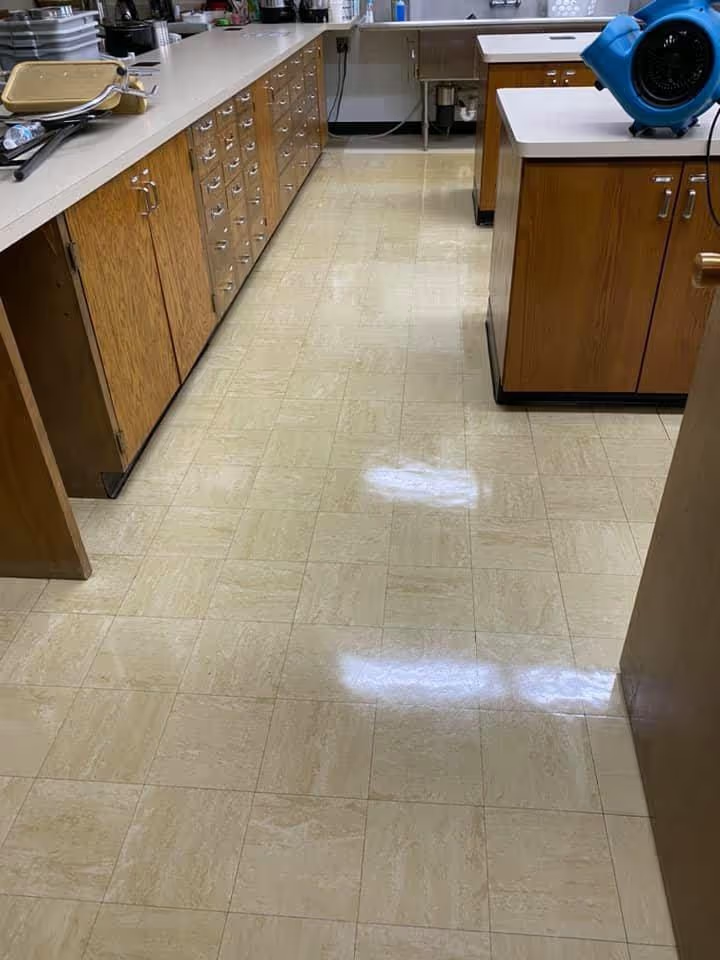
- Floor deep cleaning: Penetrating cleaning of quarry tile, epoxy, or other commercial kitchen flooring materials, including grout lines and cove bases.
- Drain maintenance: Clearing and cleaning of floor drains, including trap cleaning and sanitization.
- Wall cleaning: Degreasing of wall surfaces, particularly in cooking areas where aerosolized grease accumulates.
- Ceiling component cleaning: Maintenance of ceiling tiles, lighting fixtures, and other overhead elements affected by rising heat and grease.
- Storage area sanitation: Deep cleaning of shelving, walk-in coolers, dry storage areas, and other support spaces that daily cleaning often overlooks.
The Professional Deep Cleaning Process
Assessment and Planning
Professional cleaning begins with comprehensive evaluation:
- Contamination evaluation: Assessment of grease and carbon accumulation levels throughout the facility.
- Documentation of existing conditions: Photographic and written records of pre-cleaning conditions for comparison and verification.
- Method determination: Selection of appropriate cleaning techniques and chemicals based on specific surfaces, materials, and contamination types.
- Scheduling optimization: Coordination of cleaning activities to minimize operational disruption while ensuring thorough results.
- Compliance requirement review: Verification of specific local code requirements that must be addressed during cleaning.
Implementation and Execution
The cleaning process follows systematic protocols:
- Surface preparation: Initial removal of loose debris and protection of sensitive components that could be damaged during aggressive cleaning.
- Chemical application: Use of professional-grade degreasers and cleaners specifically formulated for commercial kitchen environments, with appropriate dwell times for maximum effectiveness.
- Agitation and removal: Implementation of appropriate scrubbing, pressure washing, or steam cleaning to remove emulsified grease and carbon.
- Rinse and neutralization: Thorough rinsing of all cleaned surfaces and neutralization of cleaning chemicals to prevent corrosion or residue issues.
- Sanitization: Application of food-safe sanitizers to ensure all surfaces meet health department requirements.
- Reassembly and testing: Proper reconstruction of disassembled equipment with function testing to verify proper operation.
Verification and Documentation
Professional cleaning concludes with quality assurance:
- Visual inspection: Detailed examination of all cleaned areas to verify contaminant removal.
- Testing: When applicable, testing of equipment function, temperature calibration, and safety systems.
- Post-cleaning documentation: Photographic and written records of completed work, particularly for exhaust systems requiring certification.
- Regulatory compliance verification: Provision of appropriate documentation for health department, insurance, or other regulatory requirements.
- Maintenance recommendation: Guidance on appropriate cleaning frequency based on observed accumulation rates and operation type.
Developing an Effective Commercial Kitchen Cleaning Schedule
Frequency Determination Factors
Cleaning schedules should be based on specific operational factors:
- Cooking volume: Higher production volumes accelerate contamination accumulation.
- Cooking type: Grease-intensive cooking (frying, grilling, broiling) requires more frequent cleaning than operations focusing on baking or steaming.
- Hours of operation: Extended operating hours increase cleaning requirements.
- Equipment age and condition: Older equipment often requires more frequent maintenance cleaning.
- Previous contamination patterns: Historical cleaning records help identify areas requiring increased attention.
Recommended Professional Cleaning Intervals
While specific needs vary, these guidelines provide starting points:
Exhaust Systems:
- High-volume/grease-intensive operations: Quarterly cleaning
- Moderate-volume operations: Semi-annual cleaning
- Low-volume operations: Annual cleaning
Cooking Equipment:
- High-use cooking equipment: Monthly deep cleaning
- Moderate-use equipment: Quarterly deep cleaning
- Specialty or limited-use equipment: Semi-annual deep cleaning
Floors and Structural Elements:
- Kitchen floors: Weekly deep cleaning
- Walls and vertical surfaces: Monthly cleaning
- Ceiling components: Quarterly cleaning
- Storage areas: Monthly rotation cleaning
Integration with Daily Maintenance
Professional cleaning complements daily protocols:
- Staff training: Education on daily cleaning requirements that prepare areas for more effective professional deep cleaning.
- Maintenance documentation: Implementation of cleaning logs that track both daily maintenance and professional service.
- Problem area identification: Systems for staff to note areas requiring special attention during professional cleaning.
- Equipment shutdown coordination: Scheduling to minimize disruption while ensuring equipment is properly prepared for deep cleaning.
- Follow-up verification: Procedures for staff to inspect professional cleaning results and report any areas requiring additional attention.
Selecting a Qualified Commercial Kitchen Cleaning Provider
Essential Qualifications
Not all cleaning companies are equipped for commercial kitchen environments:
- Specialized experience: Verified experience specifically in commercial kitchen environments, not just general commercial cleaning.
- Appropriate insurance: Comprehensive liability coverage specifically including kitchen exhaust cleaning when applicable.
- Certification: IKECA (International Kitchen Exhaust Cleaning Association) membership or certification for exhaust cleaning providers.
- Health department familiarity: Knowledge of local health code requirements and documentation formats.
- Equipment knowledge: Demonstrated understanding of commercial kitchen equipment disassembly and reassembly procedures.
Questions to Ask Before Hiring
Protect your operation by asking these key questions:
- "What specific commercial kitchen cleaning experience do you have?"
- "Can you provide references from similar foodservice operations?"
- "What certification or training do your technicians have?"
- "What documentation will you provide upon completion?"
- "How do you verify that cleaning meets appropriate standards?"
- "What measures do you take to protect equipment during aggressive cleaning?"
Conclusion
Professional commercial kitchen deep cleaning goes far beyond appearance maintenance to address critical safety, compliance, and operational concerns. While daily cleaning manages surface-level issues, only systematic professional cleaning can effectively address the accumulated contamination that affects exhaust systems, equipment performance, and structural elements.
At Campbell Cleaning, our specialized commercial kitchen cleaning services reflect our understanding of the unique challenges these environments face. Our IICRC-certified technicians apply industry-specific knowledge to develop customized cleaning protocols that address your facility's particular needs while minimizing operational disruption and maximizing safety and compliance outcomes.
By implementing a proper professional cleaning program, your commercial kitchen can maintain regulatory compliance, reduce fire risks, extend equipment life, improve energy efficiency, and create a healthier environment for both staff and customers. The investment in professional cleaning delivers returns not just in peace of mind but in tangible operational benefits and risk reduction.
.png)

.png)
